
Family Dentistry
Day-to-day dental care for all ages — check-ups, cleaning, fillings, extractions and preventive care — for the whole household at one clinic.
Medically reviewed by Dr Matthew Sng ·
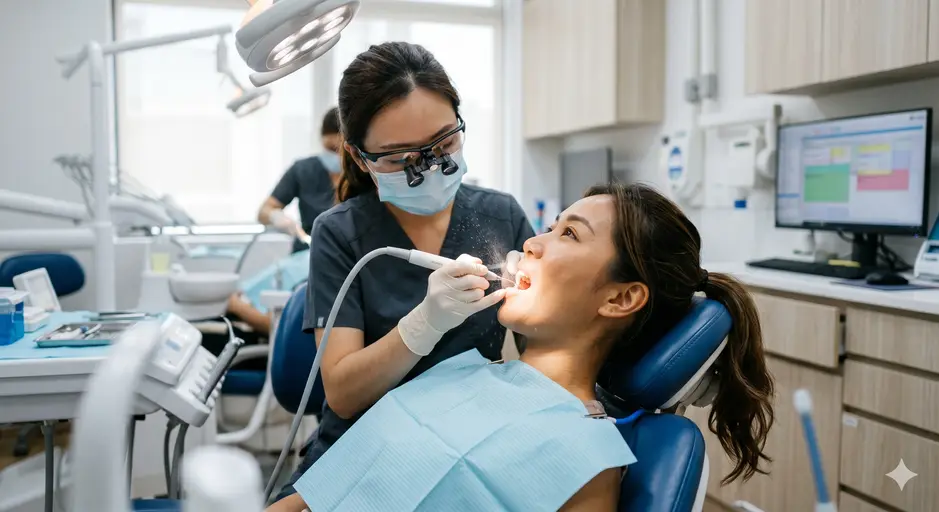
A dental examination with scaling and polishing. Simple cleaning costs S$70–S$100; complex cleaning S$110–S$130. Consultation is S$20–S$40 where charged, and optional fluoride is S$30. CHAS subsidies apply where eligible.
Scaling & polishing (simple): S$70 to S$100
Scaling & polishing (complex): S$110 to S$130
Topical fluoride (optional add-on): S$30
Consultation (general dentist): S$20 to S$40 (a Simple Consultation — waived for regular patients)
Whether scaling is simple or complex depends on your oral hygiene.
CHAS subsidises the consultation, the scaling and the polishing; the amount by card tier is in the fee tables.
Prices are indicative and based on normal case complexity. A consultation is required for a definitive quote.
Teeth Cleaning Cost in Singapore: Scaling & Polishing (2026): full fee breakdown →
A routine teeth cleaning visit combines a dental examination with scaling and polishing. Your dentist checks your teeth and gums and advises how often you should return. See the scaling and polishing fee guide for cleaning and consultation charges.
Scaling gets rid of plaque, tartar and bacterial toxins on the teeth. This helps to keep your teeth and gums healthy, preventing gum disease and bad breath. Bleeding gums need a dental assessment. If gum disease requires treatment below the gumline, your dentist may recommend root planing (deep cleaning).
Polishing removes surface stains from food, drink or tobacco. It does not bleach the natural tooth shade. If your concern is the colour within the tooth, ask whether teeth whitening is suitable after the teeth and gums have been checked.
Professional fluoride is an optional treatment recommended according to your risk of tooth decay, rather than a requirement at every cleaning visit. It helps strengthen enamel and can help early decay before a cavity forms; it does not rebuild a hole in a tooth. Your dentist advises whether you need it and how often.
Your recall interval depends on your gum health, risk of decay and ability to keep the teeth clean. Ask your dentist when to return. Bleeding gums, pain or a broken tooth should be assessed without waiting for a routine appointment.
Routine preventive care for children and adults. The dentist recommends a check-up and cleaning interval based on gum health, risk of decay and individual needs.
A single visit, commonly 30 to 45 minutes for an examination with scaling and polishing.
None needed. Gums may feel slightly tender and teeth a little sensitive for a day after a thorough clean, which settles quickly.
Scaling can cause short-lived sensitivity, especially where there is gum recession or heavier tartar. Regular visits help catch problems early, when they are simpler to treat.
Scaling and polishing are effective in preventing and managing early stages of gum disease (gingivitis). Advanced cases of gum disease may require additional periodontal treatments.
Before your appointment, make sure to brush and floss your teeth properly. It is also helpful to provide your dentist with any updates about your medical history and current medications.
Even with diligent oral hygiene practices, it is still necessary to have professional scaling and polishing. Regular brushing and flossing help prevent plaque buildup, but they cannot remove tartar that has already formed. Professional cleaning is crucial for thorough removal of tartar and maintaining optimal oral health.
Scaling and polishing can help remove surface stains and discoloration caused by plaque and tartar buildup. However, it is not a tooth whitening procedure. If you desire a significant improvement in tooth colour, your dentist may recommend additional whitening treatments.
An examination with scaling and polishing commonly takes 30 to 45 minutes, depending on the deposits and your oral health. Your dentist recommends the next visit according to your gum health and risk of decay.
Scaling and polishing are usually painless procedures. You may experience some mild discomfort or sensitivity during the process, particularly if you have sensitive teeth or gum disease. Your dentist can take steps to minimize any discomfort, such as using a local anaesthetic or desensitizing agents.
The duration of a dental check-up and cleaning can vary depending on individual needs and the condition of your teeth and gums. On average, it takes around 45 minutes to an hour to complete the process.
You may experience some slight sensitivity in your tooth after the treatment, especially if you have existing tooth sensitivity or gum recession. If you have gum disease, the roots of your teeth are no longer protected by your gums and become covered by plaque and tartar. After removing plaque and tartar, the roots become more exposed and will feel more sensitive. Some things that may help reduce sensitivity are using a sensitivity toothpaste or having your dentist apply a fluoride varnish after the cleaning. You should also avoid consuming acidic foods and drinks (eg coffee, tea, citrus fruits) or using whitening products immediately before and after your scaling and polishing appointment.
It is normal to experience slight bleeding during/after your scaling and polishing. The bleeding will usually stop after a while.
Regular dental check-ups and cleanings are important for maintaining oral health. They allow dentists to detect and address any dental issues early on, prevent the progression of oral diseases, and keep teeth and gums clean and healthy.
Scaling and polishing is a dental procedure that involves removing plaque, tartar, and stains from the teeth. It helps to maintain oral hygiene, prevent gum disease, and promote overall dental health.
For maximum benefit, you should not rinse, eat or drink for 30 minutes following the treatment.
Scaling and polishing are generally safe procedures with minimal side effects. Some individuals may experience temporary tooth sensitivity, gum tenderness, or minor bleeding during the process. These effects typically subside shortly after the procedure.
Scaling and polishing are essential components of gum disease treatment. They are effective at the early stage (gingivitis) and at removing the plaque and tartar buildup that drives the disease, which helps control and manage it. They cannot cure advanced gum disease, however — advanced cases may require additional periodontal treatment.
During a dental check-up, the dentist will examine your teeth, gums, and mouth for any signs of decay, gum disease, oral cancer, or other dental problems. X-rays may be taken to detect any underlying issues not visible to the naked eye.
Fluoride treatment during a cleaning helps strengthen the tooth enamel, making it more resistant to decay. It can also help reverse early stages of tooth decay, protect sensitive teeth, and reduce the risk of cavities.
Scaling can remove some surface stains, but polishing is more effective for stain removal. Polishing helps smooth tooth surfaces and enhances the overall appearance of the teeth.
Fluoride and X-rays are recommended according to clinical need, not automatically at every cleaning. Your dentist considers your symptoms, examination, risk of decay and previous X-rays. Professional fluoride may be recommended if you are at risk of decay. Ask which additional treatment is needed and its fee before proceeding.
When performed by a trained dental professional, scaling and polishing should not damage the enamel. The procedure is designed to remove harmful deposits without causing harm to the tooth structure. However, excessive or improper scaling can potentially damage the enamel, which is why it's important to have it done by a qualified dentist or hygienist.
You can eat after scaling and polishing. If a fluoride gel is applied, wait 30 minutes before eating, drinking, or rinsing your mouth.
Yes, scaling and polishing are safe for children and are often part of routine dental care to maintain good oral health from an early age.
The interval depends on your gum health, risk of decay and individual needs. Ask your dentist when to return. A routine review date should not delay assessment of pain, swelling or bleeding gums.
Fluoride treatments strengthen the bonding of calcium in tooth enamel to prevent cavities. A fluoride gel, cream, or varnish is applied to your teeth and left to be absorbed. For maximum benefit, do not rinse, eat, or drink for 30 minutes after the treatment.
While regular cleanings focus on the surfaces of the teeth above the gumline, root planing targets the tooth roots below the gumline. It is a more extensive cleaning procedure designed to address early stages of gum disease.
Day-to-day dental care for all ages — check-ups, cleaning, fillings, extractions and preventive care — for the whole household at one clinic.
Treats gingivitis and periodontitis (gum disease), from deep cleaning of the root surfaces (scaling and root planing) to gum surgery where bone loss has occurred.
Check-ups, preventive care and treatment for infants, children and teens, paced to each child’s needs.
Repairs teeth damaged by decay, chips or wear: the damaged portion is removed and the tooth is rebuilt with tooth-coloured filling material, usually in a single visit.
Digital radiographs that show decay between teeth, infection around roots, and bone changes not visible during a visual examination, at low radiation doses.
How check-up frequency is decided, and why it differs between patients