Dental Cleaning and Check-up
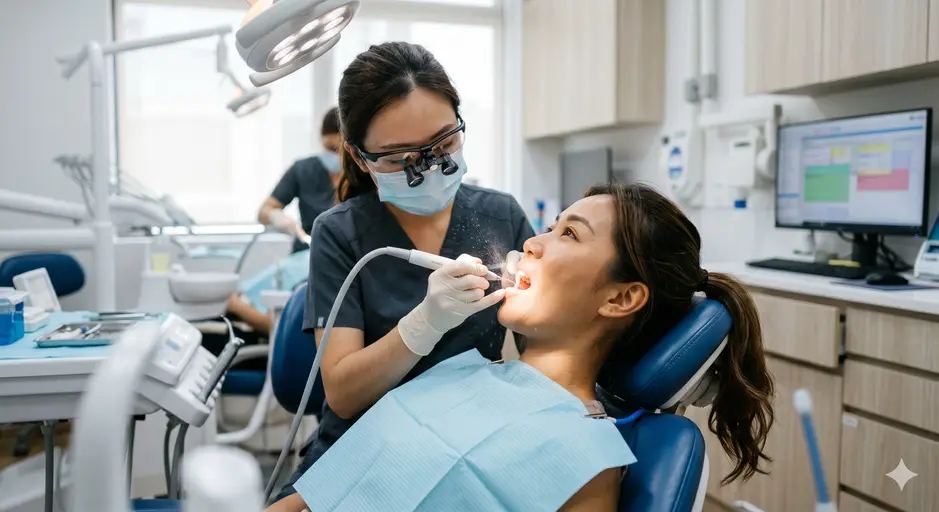
A dental examination, scaling and polishing to remove plaque, tartar and surface stains.
Medically reviewed by Dr Matthew Sng ·
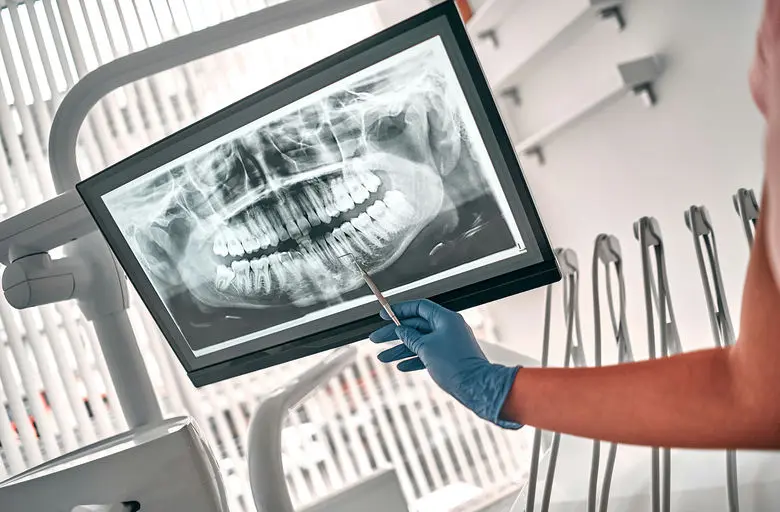
Digital radiographs that show decay between teeth, infection around roots, and bone changes not visible during a visual examination, at low radiation doses.
Prices range from a single small X-ray up to a full-mouth 3D scan.
Prices are indicative and based on normal case complexity. A consultation is required for a definitive quote.
Digital X-rays are essential to dental care, allowing the dentist to detect problems like decay or gum disease that are invisible to the naked eye. Early detection allows intervention before the condition worsens.
This type of X-ray captures an image of the crowns of your back teeth to help your dentist spot decay in between your teeth. Patients will be asked to bite on a wing-shaped device that holds the film in place so that the X-ray can be taken. This type of X-ray may be taken during your routine check-ups.
Periapical X-rays only display one or two teeth at a time but are able to capture the entire length of your teeth, right down to the roots. This type of X-ray is commonly taken during root canal treatment and to identify unusual developments in the root and surrounding bone.
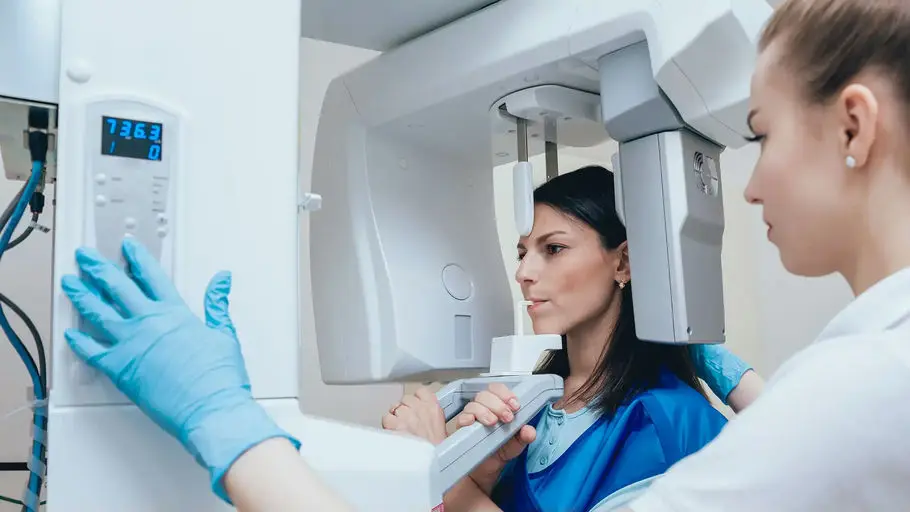
An OPG gives your dentist a panoramic view of your lower face and captures the characteristics of your mouth, such as the condition and position of your teeth. It also allows the dental surgeon to view the jaw joint, jaw bones, nasal sinuses and nasal cavity. This type of X-ray usually will be taken before and after surgical extractions, dental implant treatment and orthodontic treatment.
A Lat Ceph allows for X-rays of a patient’s facial side profile to be captured, showing the bones and facial contours. Lat Ceph X-rays are used in the planning of orthodontic treatments. Most dentists specifically use Lat Ceph to visualise the position of the patient’s jaw and cheekbone. Our Lat Ceph X-rays are available at selected clinics around Singapore.
A dental Cone Beam CT (CBCT) scan is able to create a three-dimensional (3D) image of your teeth, jaw and surrounding anatomy. This may be required for treatments like dental implants, where the dentist may need a more detailed image of your jaw and teeth. Our Cone Beam CT machines are available at selected clinics around Singapore.
Taken when the dentist needs to see what an examination cannot — decay between teeth, infection at the root, bone levels, or the position of an unerupted tooth. How often depends on your needs; they are used selectively, not routinely for everyone.
A few minutes during your visit. The image is available straight away for the dentist to review with you.
Dental X-rays use a low dose of radiation, kept as low as reasonably possible with digital sensors and shielding. Let the dentist know if you are or might be pregnant so imaging can be planned accordingly.
The frequency of digital X-rays depends on factors such as your dental health, age, and risk of dental problems. For most patients, dental X-rays are taken every 1 to 2 years as part of routine dental check-ups. However, your dentist will determine the appropriate schedule based on your specific needs.
Tell your dentist if you are pregnant or may be pregnant. Dental X-rays can be taken during pregnancy when needed for diagnosis or treatment. Your dentist will assess whether an X-ray is necessary and explain the examination.
Dentists may use radiographic imaging, such as X-rays, to assess the extent of dental trauma and plan appropriate interventions. This helps in identifying fractures, dislocations, or other internal injuries.
Digital X-rays emit significantly less radiation compared to traditional X-rays, making them safe for routine dental use. The amount of radiation exposure is low, and dentists take precautions to further minimize exposure, such as using lead aprons.
X-rays help dentists diagnose common problems, such as cavities, gum disease and infections. Radiographs allow dentists to see inside a tooth and beneath the gums to assess the health of the bone and supporting tissues that hold teeth in place. X-rays can also give your dentist a clearer view of your facial structure and anatomy, which is important to note for implant treatment and braces.
Digital X-rays are images of your teeth and oral structures taken using digital imaging technology. They replace traditional film X-rays and provide detailed images that can be viewed immediately on a computer screen.
Yes, digital X-rays are environmentally friendly compared to traditional film X-rays. They eliminate the need for chemical processing and the disposal of hazardous waste associated with film development.
Digital X-rays use electronic sensors instead of film to capture images. They require less radiation exposure, produce instant results, can be easily stored and shared electronically, and offer enhanced image quality to support diagnosis.
Don't worry, the amount of radiation involved in dental x-rays is very low and patients are provided with all possible protections, including a lead-lined apron or collar to cover portions of the body that could be exposed to x-rays. X-rays will only be taken when necessary to avoid undue risk.
Digital X-rays are essential for detecting problems like decay or gum disease that are not visible to the naked eye. Early detection helps prevent the condition from worsening.
Yes, digital X-rays can be easily shared electronically with other healthcare providers, such as specialists or dental laboratories. This facilitates collaboration and ensures continuity of care.
Yes, digital X-rays use significantly less radiation compared to traditional film X-rays. The digital sensors are more sensitive, requiring less exposure time and reducing radiation exposure by up to 80-90% compared to film X-rays.
Yes, dental X-rays are safe for children. The radiation exposure from dental X-rays is minimal, and dentists take necessary precautions, such as using lead aprons and collars, to further minimize exposure.
With digital X-rays, the images are captured and displayed on a computer screen almost instantly. This allows the dentist to review and discuss the results with you during your dental visit.
A dental examination, scaling and polishing to remove plaque, tartar and surface stains.
What dental X-rays show, how often they are taken, and the radiation dose involved