
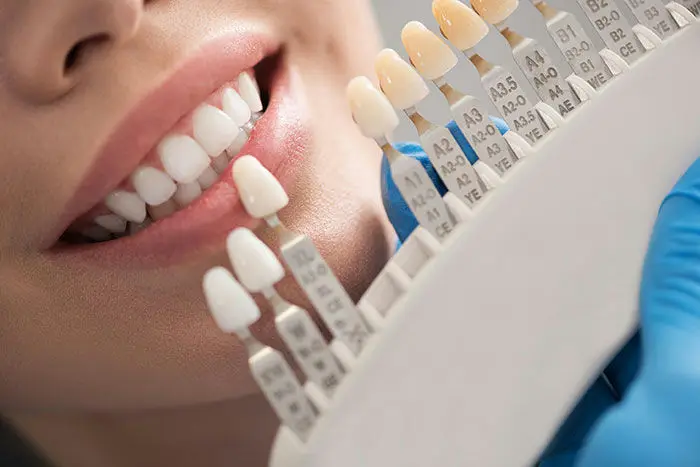
Aesthetic Dentistry
Treatments that change how teeth look — whitening, veneers, bonding, crowns and alignment — planned around your bite and overall oral health.
Chairside (in-clinic) whitening: S$900
Take-home whitening kit: S$400
Prices exclude consultation. The dentist will assess whether whitening is suitable for you before treatment.
Prices are indicative and based on normal case complexity. A consultation is required for a definitive quote.
Teeth Whitening Cost in Singapore (2026): full fee breakdown →
Teeth whitening lightens the natural shade of teeth using dental-grade whitening gel, applied either in the clinic or with custom-made take-home trays. It is carried out under a dentist's supervision after a check of the teeth and gums.
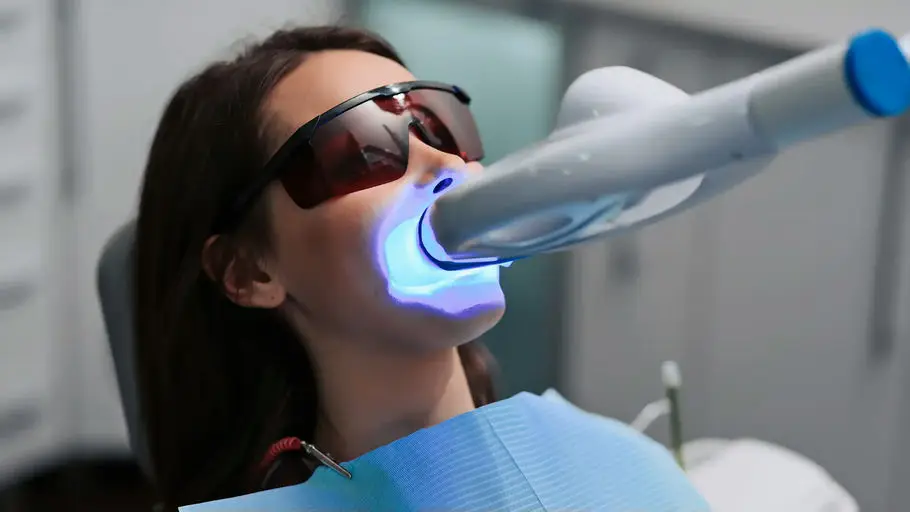
In-clinic whitening is completed in a single appointment. The gums are protected, the gel is applied to the teeth, and the dentist supervises throughout.
Take-home whitening uses trays moulded to your teeth and a gel to wear for a set period each day over about two weeks. The trays are made for your mouth so the gel stays on the teeth and off the gums.
Some people use a take-home kit after an in-clinic session to maintain the shade. Your dentist advises which approach suits your teeth and your schedule.
Whitening works on natural tooth structure. It does not change the colour of fillings, crowns or veneers, so if you have dental work on your front teeth, the shade difference between natural teeth and that work can become apparent after whitening.
Results also vary with the cause of the discolouration. Staining from food, drink and tobacco tends to respond differently from discolouration that comes from within the tooth, and your dentist explains what to expect for your teeth before starting.
Results are not permanent and fade over time.
A check beforehand rules out decay and gum problems, both of which should be treated before whitening. Whitening an unhealthy tooth or inflamed gums can be uncomfortable and does not address the underlying issue.
Over-use of whitening gel can affect enamel, which is the reason for supervision and for the set wear times that come with a take-home kit.
Whitening products sold directly to the public are capped at 0.1% hydrogen peroxide under the Health Sciences Authority's cosmetic product regulations. Above that concentration and up to 6%, the gel is prescribed by a registered dental practitioner for home use, after a consultation.
That is the difference between a take-home kit issued by a dentist and one bought online. HSA has published a consumer warning about a DIY kit bought online that left the user in pain, and gel applied without trays made for your mouth sits on the gums as well as the teeth.
For current fees for in-clinic and take-home whitening, see the teeth whitening cost guide.
Whitening is offered across our Singapore clinics, starting with a check of the teeth and gums and a conversation about what is realistic for your teeth. Book online, call, or ask on WhatsApp.
People with healthy teeth and gums who want to lighten the natural shade of their teeth. A check first rules out decay or gum problems, and the dentist explains that whitening works on natural teeth but not on fillings, crowns or veneers. Results vary with the cause of discolouration.
In-clinic whitening is done in a single appointment; a take-home kit with custom trays is used over about two weeks.
No downtime. Short-lived tooth sensitivity and occasional gum tenderness are common during and just after whitening and settle within a few days.
Temporary sensitivity is the usual side effect. Whitening does not change the colour of existing dental work, results are not permanent and fade over time, and over-use can affect enamel — so it is done under a dentist's guidance.
Dental insurance typically does not cover the cost of cosmetic procedures like dental whitening since it is considered an elective treatment. However, it's advisable to check with your insurance provider to understand their specific coverage policies.
Dental whitening products contain active ingredients, typically hydrogen peroxide or carbamide peroxide, which penetrate the tooth enamel and break down the stains. This process helps to lighten the color of the teeth and achieve a brighter smile.
When used correctly, dental whitening should not damage your teeth. However, excessive or improper use of whitening products may cause tooth sensitivity, gum irritation, or enamel erosion. It's best to consult with a dentist before starting any whitening treatment.
Dental veneers are resistant to staining, so they will not respond to traditional teeth whitening treatments. If you're considering whitening your teeth, it's best to do it before getting veneers to ensure a uniform shade.
Teeth whitening treatments can sometimes cause temporary tooth sensitivity. However, this sensitivity is usually mild and should subside shortly after the treatment.
Certain drinks such as coffee, tea, red wine, and foods like curry, cherries and blueberries are prone to causing stains on your teeth. To avoid stains, you can: 1. Use a straw to drink 2. Avoid constant eating or sipping beverages throughout the day 3. Brush your teeth after meals
No, an impression of your teeth is taken and sent to a lab for fabrication. The whitening kit will be ready for collection in approximately 2 weeks.
It is advisable to consult our dentist to assess your condition and determine if you are suitable for the treatment. This ensures the treatment is appropriate for you.
Yes, dental whitening is generally considered safe when performed under the supervision of a dental professional using approved products. However, it's essential to follow the instructions provided and avoid overusing whitening products.
Dental whitening is generally safe for most individuals. However, it may not be suitable for those with extensive dental restorations, such as dental crowns or veneers, as whitening agents do not lighten these materials. Pregnant or breastfeeding women are also advised to avoid whitening treatments.
We offer whitening treatment that will be able to lighten the natural shade of your tooth. If the discolouration of your teeth is more severe, you may consider having veneers done to cover the discoloured teeth.
Common side effects of whitening include temporary tooth sensitivity and mild gum irritation. These usually resolve on their own shortly after treatment.
We use the Philips (Zoom) Whitening system for chair-side whitening. After an hour of treatment with a high concentration whitening agent, you can see visible effects. A protective resin is applied to your gums to prevent irritation from the gel.
The effects of professional teeth whitening can last 12 to 18 months, depending on your oral hygiene, diet, and lifestyle habits. Acidic drinks such as coffee, tea, and soft drinks, and smoking, can shorten how long the result lasts.
When it comes to the practice of making teeth brighter, the words whitening and bleaching are often used interchangeably.
Yes, there are alternatives to dental whitening. Dental veneers or bonding can be used to cover stained teeth permanently. Additionally, practicing good oral hygiene, avoiding stain-causing foods and beverages, and regular dental cleanings can help maintain a brighter smile.
Over-the-counter whitening products, such as whitening toothpaste, strips, and gels, can help remove surface stains to some extent. However, professional whitening treatments performed by a dentist tend to be more effective as they use stronger concentrations of whitening agents.
Home whitening kits have a lower concentration of whitening agent. A custom-made tray is used to hold the whitening gel against your teeth for one to four hours a day for one to two weeks.
An in-clinic (chairside) whitening session usually takes about 60 to 90 minutes. Take-home whitening is carried out over about two weeks, wearing custom trays daily as directed by your dentist.
Our whitening gel is Opalescence PF 35%, which contains potassium nitrate and fluoride.
The effectiveness of whitening depends on various factors, such as your diet and smoking habits.
Teeth whitening is usually not painful. Some patients may experience temporary sensitivity during or after the procedure, but this typically resolves within a few days.
Dental whitening can significantly lighten the colour of your teeth, but it cannot make them completely white. The extent of whitening achievable depends on factors such as the natural shade of your teeth, the type of stains present, and the whitening method used.
Treatments that change how teeth look — whitening, veneers, bonding, crowns and alignment — planned around your bite and overall oral health.
Botulinum toxin injections for dental indications such as jaw muscle pain, teeth grinding (bruxism) and a gummy smile. Effects appear within days and last around three to four months.
Removable clear aligners that move teeth over a planned course of treatment. A consultation assesses your teeth and bite and establishes the treatment plan. See package fees, exclusions and treating dentists below.
Thin porcelain or composite shells bonded to the front surface of teeth to change their shape and colour, commonly used for chips, gaps and discolouration.
The chemistry behind whitening, why results vary, and what it cannot lift
Four benefits of dentist-supervised teeth whitening, and what it will not fix