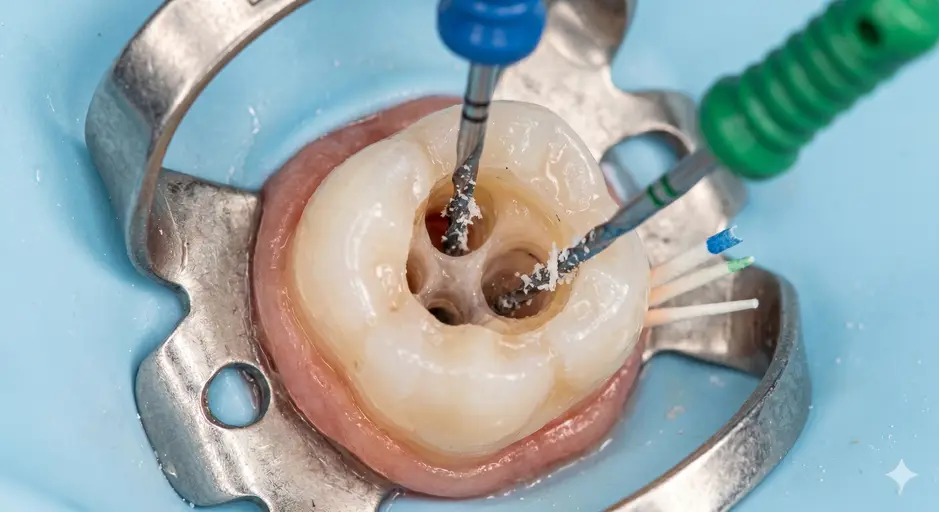
Root Canal Treatment
Removes infected or inflamed pulp from inside a tooth, then cleans, shapes and seals the root canals so the natural tooth can be kept. Usually one to three visits; a crown is often recommended afterwards.
Medically reviewed by Dr Matthew Sng ·
A dental emergency is any problem that needs prompt attention — severe toothache, a knocked-out or broken tooth, a lost filling or crown, bleeding or swelling, or an injury to the mouth or jaw. Getting seen early often means a simpler treatment, and often the tooth can still be saved.
These steps are first aid only — they do not replace seeing a dentist.
Use the urgent appointment options by region to see the next available slots across every clinic in your area, or call us and our team will find you the nearest slot. Emergency care is available across our clinics island-wide — find your nearest clinic.
For a severe facial injury, difficulty breathing or swallowing, or uncontrolled bleeding, go to a hospital emergency department.
Anyone with a sudden or severe dental problem — pain, a broken or knocked-out tooth, swelling, bleeding, or a lost filling or crown. If you are unsure whether it is urgent, contact us and our team will advise.
Urgent visits focus on relieving pain and stabilising the problem, often in a single appointment; some issues then need a follow-up for definitive treatment (for example a crown or root canal).
Depends on the problem and the treatment given. The dentist explains what to expect and any aftercare; a temporary measure on the day is often followed by definitive treatment at a later visit.
Delaying care can let a problem worsen — pain, infection, or losing a tooth that might otherwise have been saved. Some emergency treatments are a first step, with further treatment planned once the urgent issue settles.
Removes infected or inflamed pulp from inside a tooth, then cleans, shapes and seals the root canals so the natural tooth can be kept. Usually one to three visits; a crown is often recommended afterwards.
Surgical removal of impacted or partially erupted wisdom teeth. An assessment establishes whether surgery is needed. Compare general-dentist and specialist fees, check inclusions and find a clinic below.
Emergency and follow-up care for knocked-out, broken or displaced teeth and injuries to the jaws and face, from splinting and re-implantation to surgical repair.
Removal of teeth that cannot be saved due to decay, gum disease, fracture or crowding, done under local anaesthesia. Replacement options are discussed before any extraction.
Diagnosis and treatment of teeth that ache with cold, heat or sweet food. Depending on the cause, options range from desensitising agents and fillings to gum or root canal treatment.
What counts as a dental emergency, what to do straight away, and where to be seen