Aesthetic Dentistry
Treatments that change how teeth look — whitening, veneers, bonding, crowns and alignment — planned around your bite and overall oral health.
Invisalign Light: S$3,900 — simple cases, up to 14 aligner sets per the ClinCheck plan
Invisalign Signature: S$6,500 — suits typical cases; one refinement round is included, the 2nd and 3rd are S$500 each and further rounds S$800 each
Invisalign Pro: S$7,900 — complex cases, such as above 60 aligner sets or where extractions are involved
The recommended option depends on the complexity of your case. Prices exclude initial X-rays, retainers, extractions, and consultation. A staggered payment plan is available.
Prices are indicative and based on normal case complexity. A consultation is required for a definitive quote.
Invisalign straightens teeth using a series of removable clear aligners, each worn for about one to two weeks before moving to the next in the sequence. Treatment commonly takes 6 to 18 months depending on how far the teeth need to move.
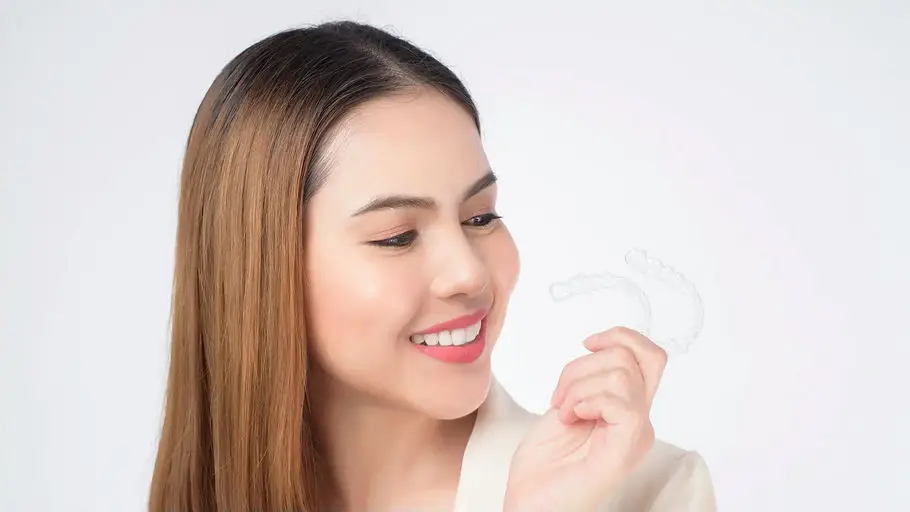
Each aligner is a thin, clear tray moulded to fit over your teeth. Every tray in the series is shaped slightly differently from the one before it, so wearing them in order moves the teeth in small steps.
Because the aligners are removable, you take them out to eat and to brush. They need to be worn about 20 to 22 hours a day for the sequence to work as planned.
Small tooth-coloured attachments are sometimes bonded to certain teeth to give the aligners something to grip, and occasional refinement aligners may be added towards the end to finish the case.
Invisalign Express covers small movements — slight crowding or spacing, or teeth that have shifted after previous orthodontic treatment. It uses a shorter series of aligners and takes up to about six months.
Invisalign Comprehensive covers a fuller range of movement, including crowding, spacing and bite correction where the teeth need to travel further. It commonly runs 12 months or longer.
Which one applies is decided from your records at the consultation, since it depends on the movements your case needs. Complex cases may be suited to braces instead — a consultation compares both rather than assuming one.
For current fees and how Invisalign compares with fixed braces on price, see the Invisalign price guide.
Invisalign is offered across our Singapore clinics. A consultation assesses whether your case suits aligners, explains what the sequence would involve, and sets out the timeline before you commit. Book online, call, or ask on WhatsApp.
Teenagers and adults with mild to moderate crowding, spacing or bite issues who prefer a removable, discreet option to braces. It relies on wearing the aligners about 20 to 22 hours a day, so it suits people who will keep to that. Complex cases may be suited to braces — a consultation advises.
Commonly 6 to 18 months depending on how much the teeth need to move, with a new set of aligners about every one to two weeks. A retainer is worn afterwards to hold the result.
There is no downtime. Each new aligner can feel tight or make teeth tender for a day or two — that is the teeth moving — and settles quickly. Mild lisping early on usually passes within a few days.
Aligners only work while worn, so results depend on wearing them as directed; under-wear slows or limits progress. Teeth can drift back without a retainer. Attachments and occasional refinements may be needed to finish the case.
It is normal for brackets and wires to dislodge. There is no need for immediate treatment unless: a loose bracket is at risk of being swallowed, a wire is poking your cheeks or gums, a wire has slipped out of a bracket used for elastic wear (stop all elastic wear immediately), you cannot wear prescribed rubber bands on the affected bracket, the dislodgement was due to trauma, or your next appointment is more than 4 weeks away.
Braces are the most common method of straightening teeth. Invisalign is another option offered at our clinics. For more details on which treatment is suitable for you, please consult one of our dentists or orthodontists (braces specialists).
Typically, orthodontic visits for Invisalign are scheduled every 6 to 8 weeks. During these visits, the orthodontist will monitor your progress, provide you with new sets of aligners, and address any concerns or questions you may have.
Invisalign works by using a series of aligners that are worn sequentially. Each aligner applies gentle pressure to specific teeth, gradually moving them into alignment. The aligners are changed every 1 to 2 weeks as directed by the orthodontist.
Most of our orthodontic patients utilise traditional braces and Invisalign clear aligners due to their proven track records of successful outcomes. However on a case-by-case basis, our dentists may be able to offer other options based on their suitability for your case.
You are never too old for orthodontic treatment. Teeth can continue to move around, even when we get older, resulting in misalignment. This is common, even if you've had braces when you were younger. If you are conscious about how you look with conventional metal braces, you may want to consider going for the less noticeable options like Invisalign or ceramic braces.
Yes, as with any orthodontic treatment, a retainer is typically recommended after completing Invisalign treatment. Retainers help to maintain the newly aligned teeth and prevent them from shifting back to their original positions. Your orthodontist will advise you on the appropriate retainer schedule for your specific case.
While the aligners are made from clear plastic, they are not entirely invisible. However, they are significantly less noticeable compared to traditional metal braces, making them a more discreet orthodontic option.
Invisalign aligners may initially cause a slight change in speech, but most people adjust to them within a short period. As you become accustomed to wearing the aligners, any speech changes should resolve naturally.
The duration of your Invisalign treatment is capped at five years. However, Invisalign patients have typically never had to undergo treatment for more than three years.
When teeth are severely crowded or protruding, extractions may be required. Consult with our doctors to understand more about your treatment needs.
Yes, one of the significant advantages of Invisalign is that the aligners are removable. This means you can take them out to eat and drink, allowing you to enjoy your meals without any dietary restrictions. However, it's important to wear them for the recommended 20 to 22 hours per day for optimal results.
Extractions of up to 4 teeth may be necessary for severe crowding or protrusion, but not all patients require extractions.
It is normal to experience some discomfort or soreness after the initial placement of braces or when aligners are changed. However, the discomfort is usually mild and can be managed with over-the-counter pain relievers.
Invisalign is a popular orthodontic treatment that uses a series of clear, removable aligners to straighten teeth and correct bite issues. These aligners are custom-made for each patient and gradually shift the teeth into their desired positions.
Orthodontic treatment can be done at any age, but it is commonly recommended for children and teenagers when their permanent teeth have erupted. However, adults can also benefit from orthodontic treatment.
There will be some discomfort, but generally, Invisalign will be more comfortable than braces. Braces get tightened once every four to six weeks, and this means that more force needs to be applied in a single session to get the teeth to move to the next desired position. In contrast, for Invisalign treatment, you will be required to change to a new set of aligners every week, so the difference in pressure will be less.
Invisalign treatment generally takes 1 to 3 years, depending on the severity of the problem. It requires a consultation, a second consultation for the treatment plan, issuance of aligners 6 to 8 weeks after records are sent to the US, and follow-up appointments to check progress. After treatment, retainers are issued to anchor your teeth.
If you require further adjustments after five years, we recommend continuing treatment with self-ligating braces, as they may be more effective in achieving your desired result.
We have both orthodontists and general dentists who provide orthodontic treatment at Advanced Dental. If you would prefer to be seen by a specialist (orthodontist), let us know and our team will arrange it.
The duration of orthodontic treatment varies depending on the complexity of the case, the age of the patient, and the type of orthodontic device used. Treatment can range from several months to a few years.
Invisalign uses clear, removable aligners to straighten teeth. Invisalign Comprehensive has no limit on the number of aligners and a treatment duration capped at five years. Invisalign Express is limited to 7 aligners and is suitable for very minor crowding or spacing issues.
Yes, you can engage in sports and play musical instruments while wearing Invisalign. Since the aligners are removable, you can take them out during these activities. However, it's important to wear a mouthguard during contact sports to protect your teeth.
It's essential to maintain good oral hygiene while undergoing Invisalign treatment. You should remove the aligners and brush your teeth thoroughly after each meal before putting the aligners back in. The aligners can be cleaned using a soft toothbrush and mild soap or the recommended Invisalign cleaning system.
Invisalign generally causes less pain than braces. You change to a new set of aligners weekly, which applies less pressure in a single session compared to the monthly adjustments of braces.
Treatments that change how teeth look — whitening, veneers, bonding, crowns and alignment — planned around your bite and overall oral health.
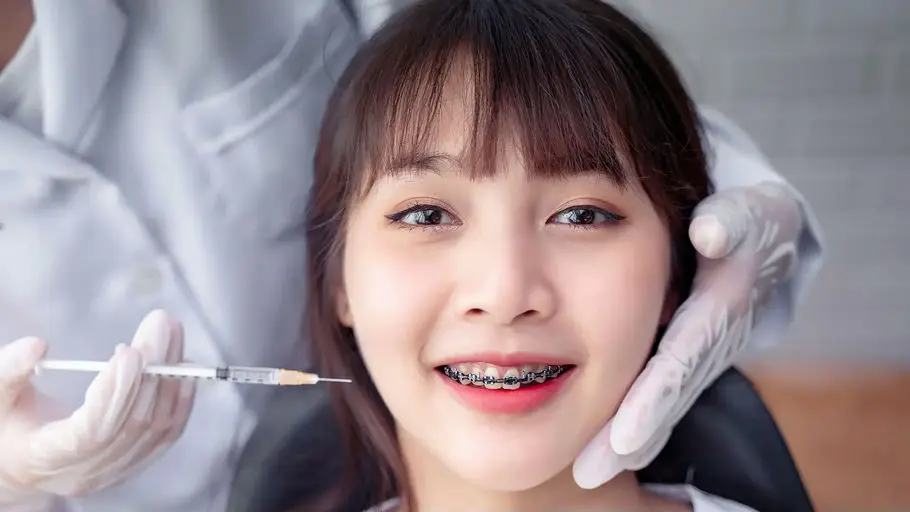
Botulinum toxin injections for dental indications such as jaw muscle pain, teeth grinding (bruxism) and a gummy smile. Effects appear within days and last around three to four months.
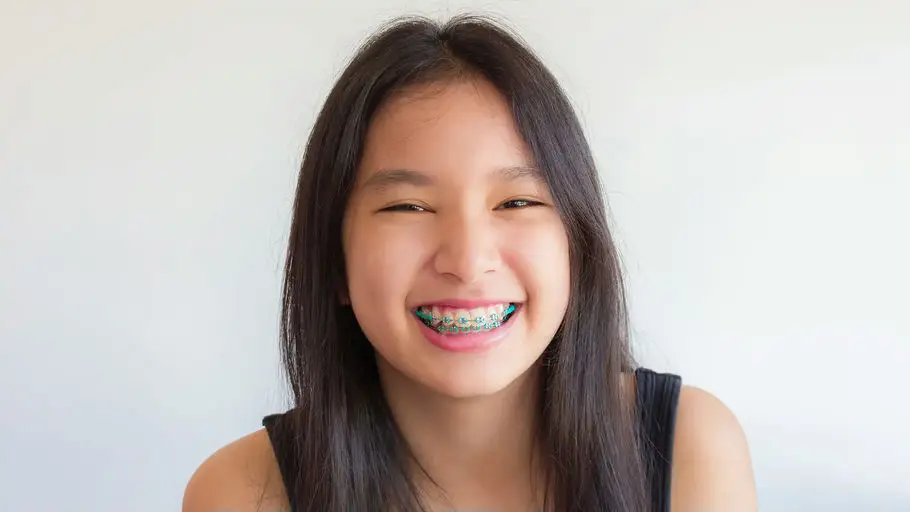
Fixed metal or ceramic brackets and wires that move teeth into alignment, adjusted every four to eight weeks. Treatment commonly takes 18 to 30 months.
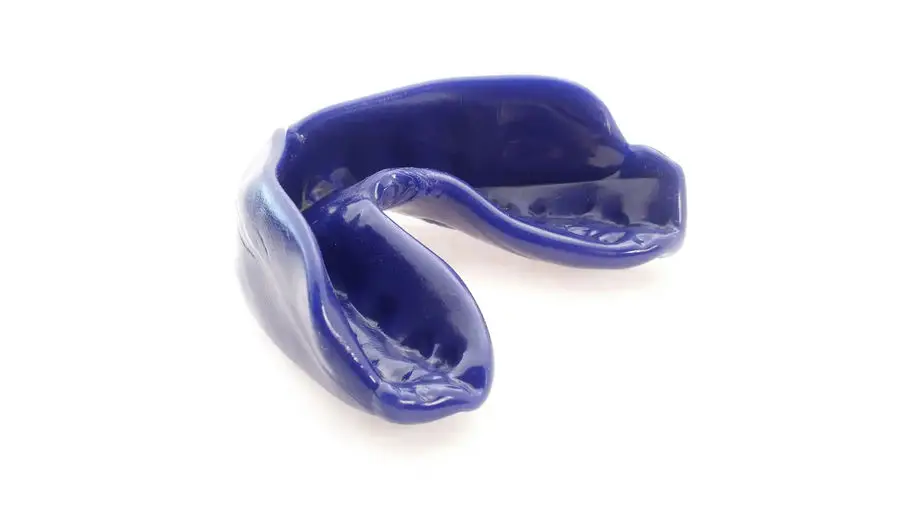
Custom-fitted guards made from impressions of your teeth: sports mouthguards protect against impact, while night guards protect against grinding (bruxism) during sleep.
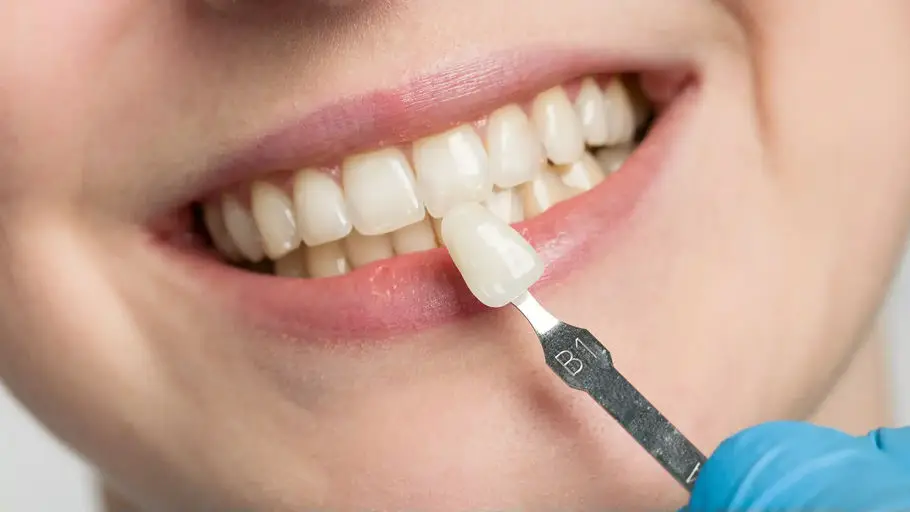
Thin porcelain or composite shells bonded to the front surface of teeth to change their shape and colour, commonly used for chips, gaps and discolouration.
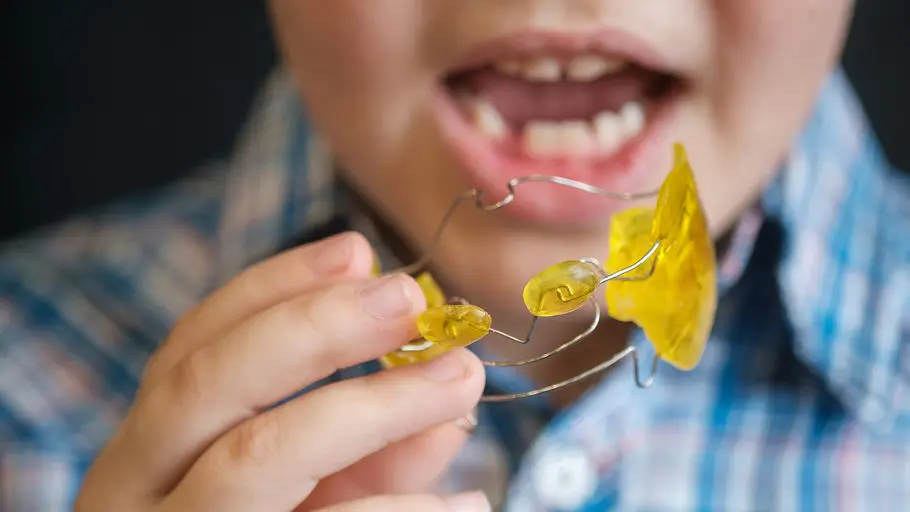
Appliances that guide tooth position and jaw growth — expanders, functional appliances, space maintainers and habit-breaking devices — often used in children before or alongside braces.
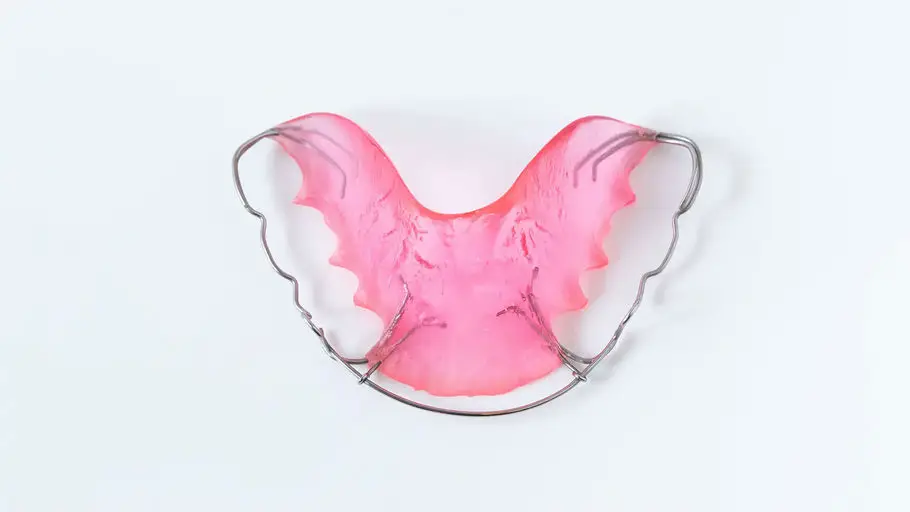
Custom appliances worn after braces or aligner treatment to hold teeth in their corrected positions — removable clear or Hawley retainers, or a fixed wire behind the teeth.
Lightens the shade of natural teeth using dental-grade whitening gel, applied in-clinic or with custom take-home trays. Results vary with the cause of discolouration.
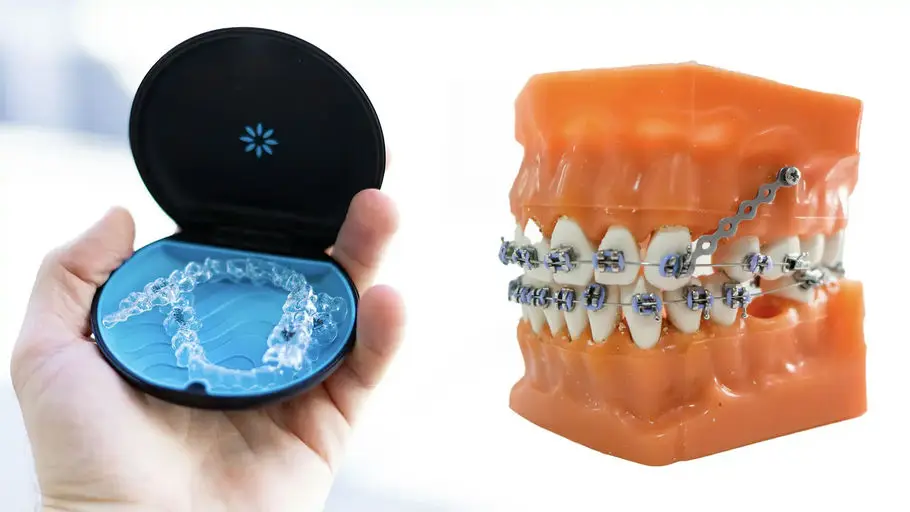
How clear aligners and fixed braces compare on the cases they treat, visibility and cost