Aesthetic Dentistry
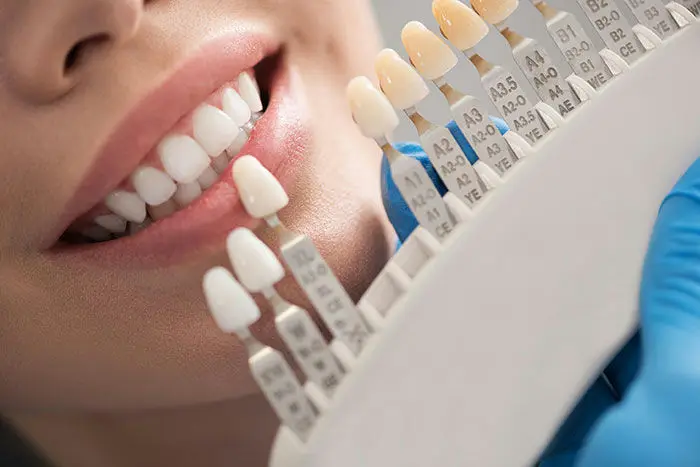
Treatments that change how teeth look — whitening, veneers, bonding, crowns and alignment — planned around your bite and overall oral health.
Metal braces: S$4,500 to S$4,900
Ceramic (tooth-coloured) braces are S$5,500 to S$7,000. Where a case falls within these ranges depends on its complexity. A staggered payment plan is available. Prices exclude initial X-rays, retainers, extractions, and consultation.
Prices are indicative and based on normal case complexity. A consultation is required for a definitive quote.
Braces are fixed brackets and wires that gradually move teeth into alignment. They are used for crooked, crowded, gapped or protruding teeth, and for correcting how the upper and lower teeth bite together. Treatment commonly takes 18 to 30 months, with an adjustment visit every four to eight weeks.
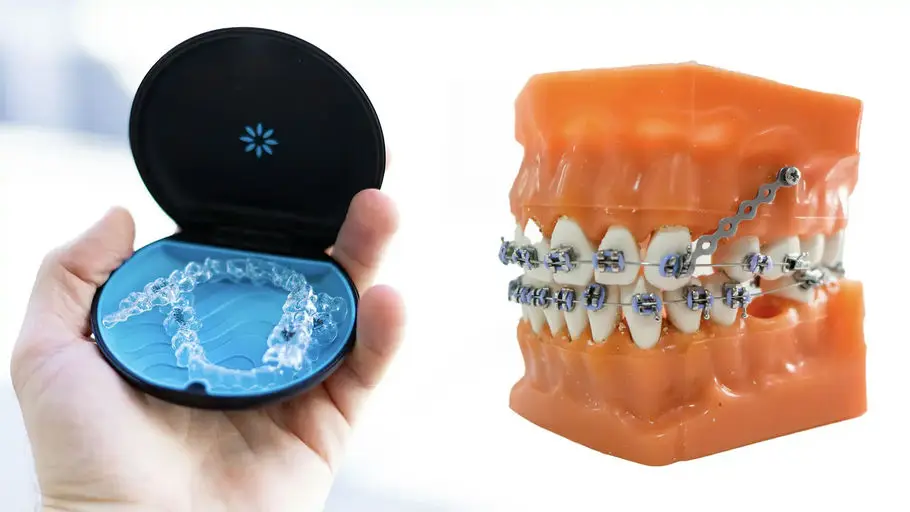
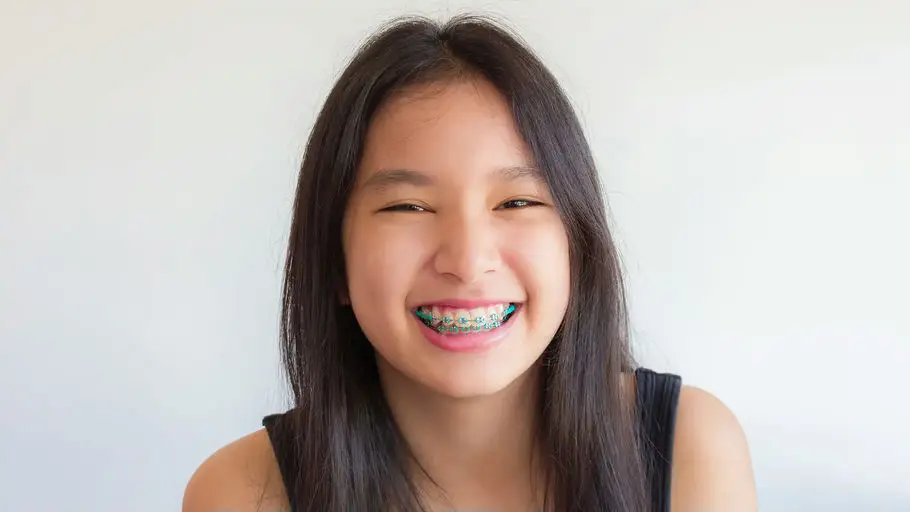
Metal braces use stainless steel brackets bonded to the front of each tooth, joined by a wire. This is the type people picture, and it handles the full range of tooth movements. The elastic bands holding the wire are changed at each adjustment visit, and you pick the colour.
Ceramic braces work the same way but use tooth-coloured brackets, so they are less noticeable against the tooth. They suit people who want a discreet fixed option.
Self-ligating braces hold the wire with a built-in clip on each bracket rather than elastic bands. There are fewer parts around the bracket for food to catch on, and no ligatures to replace at each visit.
Which type suits you depends on the movements your case needs and how visible you want the appliance to be. A consultation covers both.
Brackets and wires make brushing harder, and plaque left around them can cause decay and gum inflammation. Cleaning carefully around each bracket, and keeping up routine check-ups during treatment, protects the teeth while they are moving.
For current fees by braces type and how payment is staged, see the braces price guide.
If you would prefer a removable option, Invisalign uses a series of clear aligners instead of fixed brackets. Complex cases are often suited to braces — a consultation compares the two for your case.
Braces treatment is offered across our Singapore clinics, with orthodontic cases seen by specialist orthodontists and orthodontics registrars. Book a consultation online, call, or ask on WhatsApp.
Children, teenagers and adults with crooked, crowded, gapped or protruding teeth, or a bite that needs correcting. Teeth and gums should be healthy before treatment, and any decay or gum disease is treated first. A consultation and records (X-rays, photos) plan the case.
Commonly 18 to 30 months depending on the case, with adjustment visits every four to eight weeks. A retainer is worn afterwards to hold the result.
Teeth often feel tender for a few days after fitting and after each adjustment, easing with soft foods and simple pain relief. The lips and cheeks adjust to the brackets over the first couple of weeks; orthodontic wax helps with any rubbing.
Braces make cleaning harder, so without good brushing there is a risk of decay and gum inflammation around the brackets. Some root shortening and short-term discomfort can occur, and teeth can drift back if the retainer is not worn as directed.
It's best to avoid sticky, hard, or chewy foods that can damage or dislodge the braces. Examples include chewing gum, hard candies, popcorn, nuts, and ice. Additionally, minimizing consumption of sugary foods and drinks is important to maintain oral health during braces treatment.
Yes, there are mouthguards specifically designed for individuals with braces. These mouthguards accommodate the brackets and wires, providing protection for both the teeth and the orthodontic appliances.
Most patients find the discomfort associated with braces inconvenient but manageable. You may experience some soreness during the first few days following bonding or adjusting your braces. To minimise any irritation, you may apply dental wax to the braces to keep them from rubbing against the inside of your mouth. Dental wax can be requested from our dental clinic receptionists.
We generally can accommodate transfers if you continue treatment with the same doctor. If you wish to transfer, please discuss it with your treating doctor.
Yes, after braces are removed, a retainer is usually prescribed to prevent teeth from shifting back to their original positions. Initially, the retainer may need to be worn full-time, and over time, the frequency may decrease to wearing it only at night.
It is normal for brackets and wires to dislodge. There is no need for immediate treatment unless: a loose bracket is at risk of being swallowed, a wire is poking your cheeks or gums, a wire has slipped out of a bracket used for elastic wear (stop all elastic wear immediately), you cannot wear prescribed rubber bands on the affected bracket, the dislodgement was due to trauma, or your next appointment is more than 4 weeks away.
If no further adjustments are needed, the removal of braces with polishing of excess composite costs S$300. A set of clear retainers costs S$400. There is an additional charge of S$300 if you wish to have final records (X-rays, models, photos) taken.
Braces are the most common method of straightening teeth. Invisalign is another option offered at our clinics. For more details on which treatment is suitable for you, please consult one of our dentists or orthodontists (braces specialists).
Most of our orthodontic patients utilise traditional braces and Invisalign clear aligners due to their proven track records of successful outcomes. However on a case-by-case basis, our dentists may be able to offer other options based on their suitability for your case.
In Singapore, if you are under 21 years old, you must be accompanied by your parent/guardian during the consultation. If that is not possible, they must be there during the extractions or bonding of braces appointment (whichever is earlier) to give their consent.
We offer a staggered payment plan for metal and ceramic braces. The first payment is S$300 for records taking. The second payment is 50% of the outstanding package amount upon bonding of the brackets. Subsequent payments are S$200 for every follow-up visit until the outstanding amount is paid off.
Metal, Traditional Braces use stainless steel brackets and elastic bands. Metal, Self-Ligating Braces use specialized clips instead of elastic bands, offering a shorter treatment period, fewer appointments, and greater comfort. Ceramic, Self-Ligating Braces have transparent brackets, making them less noticeable.
We typically consider it a new braces case unless it is close to completion. If so, the price for each review/adjustment is S$200. It is advisable to schedule a consultation with our dentist to assess your teeth and advise you further.
If your child has crooked teeth, we recommend that you bring them for a consultation at around the age of 7. By this age, some of the adult teeth would have begun to erupt, and it is possible to identify unfavourable growth patterns (e.g., cross bites, deep bites). While early treatment may not necessarily prevent the need for comprehensive treatment subsequently, it may simplify future treatment or decrease the length of time spent in treatment.
You are never too old for orthodontic treatment. Teeth can continue to move around, even when we get older, resulting in misalignment. This is common, even if you've had braces when you were younger. If you are conscious about how you look with conventional metal braces, you may want to consider going for the less noticeable options like Invisalign or ceramic braces.
Yes, you can continue to participate in sports and play musical instruments while wearing braces. However, it's recommended to wear a mouthguard during contact sports to protect your teeth and braces. For musical instruments, you may experience an adjustment period to adapt to playing with braces.
Braces treatment must be carried out by the same doctor for the entire duration of the treatment. We appreciate your understanding.
In general, the treatment time ranges from 1 to 3 years. You will usually be required to see your dentist or orthodontist every 4 to 6 weeks. Its actual duration depends on the severity of the problem, how regularly you attend follow-up visits, the maintaining of good dental hygiene, and following your dentist's instructions closely.
When teeth are severely crowded or protruding, extractions may be required. Consult with our doctors to understand more about your treatment needs.
Most patients find the discomfort to be manageable, especially during the first few days after bonding or adjustment. You can use dental wax to prevent rubbing or take painkillers to alleviate discomfort, though they are usually not necessary.
Extractions of up to 4 teeth may be necessary for severe crowding or protrusion, but not all patients require extractions.
Yes, it is normal for your teeth to feel sore for a few days after an adjustment. You can take painkillers like paracetamol and rinse your mouth with cold water to alleviate the discomfort. If the symptoms worsen with severe pain and fever on the second day, contact the clinic immediately.
No, there are no further subsidies for CHAS cardholders for braces treatment.
It is normal to experience some discomfort or soreness after the initial placement of braces or when aligners are changed. However, the discomfort is usually mild and can be managed with over-the-counter pain relievers.
Initially, braces may slightly affect your speech as you adjust to having them in your mouth. This is temporary and most people adapt within a few days to a couple of weeks. Speaking slowly and practicing proper pronunciation can help minimize any speech changes.
It's crucial to maintain good oral hygiene while wearing braces. Brush your teeth at least twice a day using a soft-bristle toothbrush and fluoride toothpaste. Flossing with special orthodontic floss threaders or using a water flosser is necessary to clean between the teeth and around the braces.
Dental braces are orthodontic devices used to correct misaligned teeth and bite issues. They consist of brackets, wires, and sometimes additional components such as bands or rubber elastics. Braces apply gentle pressure to gradually move teeth into their desired positions.
Orthodontic treatment can be done at any age, but it is commonly recommended for children and teenagers when their permanent teeth have erupted. However, adults can also benefit from orthodontic treatment.
There will be some discomfort, but generally, Invisalign will be more comfortable than braces. Braces get tightened once every four to six weeks, and this means that more force needs to be applied in a single session to get the teeth to move to the next desired position. In contrast, for Invisalign treatment, you will be required to change to a new set of aligners every week, so the difference in pressure will be less.
Orthodontic visits are typically scheduled every 4 to 8 weeks, depending on your treatment plan. These visits allow the orthodontist to make adjustments, monitor progress, and address any concerns or issues that may arise during treatment.
Forestadent (Germany) and Damon (USA) are different brands of self-ligating metal braces that offer the same benefits compared to traditional metal braces.
If you require further adjustments after five years, we recommend continuing treatment with self-ligating braces, as they may be more effective in achieving your desired result.
We have both orthodontists and general dentists who provide orthodontic treatment at Advanced Dental. If you would prefer to be seen by a specialist (orthodontist), let us know and our team will arrange it.
The duration of orthodontic treatment varies depending on the complexity of the case, the age of the patient, and the type of orthodontic device used. Treatment can range from several months to a few years.
Yes, one-time services are available. Bonding of a loose bracket is S$100 per bracket/unit. An adjustment/review is S$200 per review/adjustment. Other adjustments are determined on a case-by-case basis. We recommend a consultation with our dentist first.
Braces treatment typically takes 1 to 3 years, depending on the complexity of the case. The process involves a consultation, bonding of the braces, regular adjustments every 4 to 6 weeks, and eventually, the removal of the braces followed by wearing retainers.
Yes, you can wear a mouthguard with braces or dental restorations. Custom-fitted mouthguards can be made to accommodate these dental appliances or restorations, providing effective protection.
Treatments that change how teeth look — whitening, veneers, bonding, crowns and alignment — planned around your bite and overall oral health.
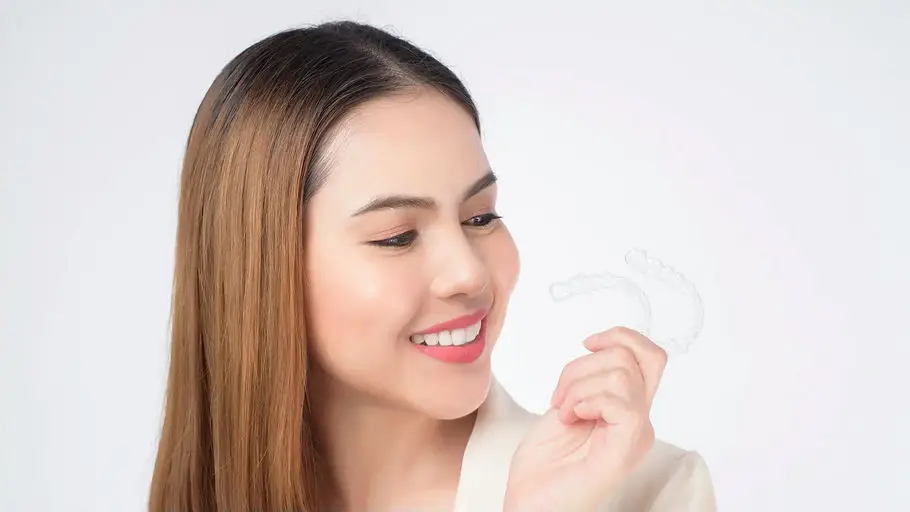
Removable clear aligners that move teeth over a planned course of treatment. A consultation assesses your teeth and bite and establishes the treatment plan. See package fees, exclusions and treating dentists below.
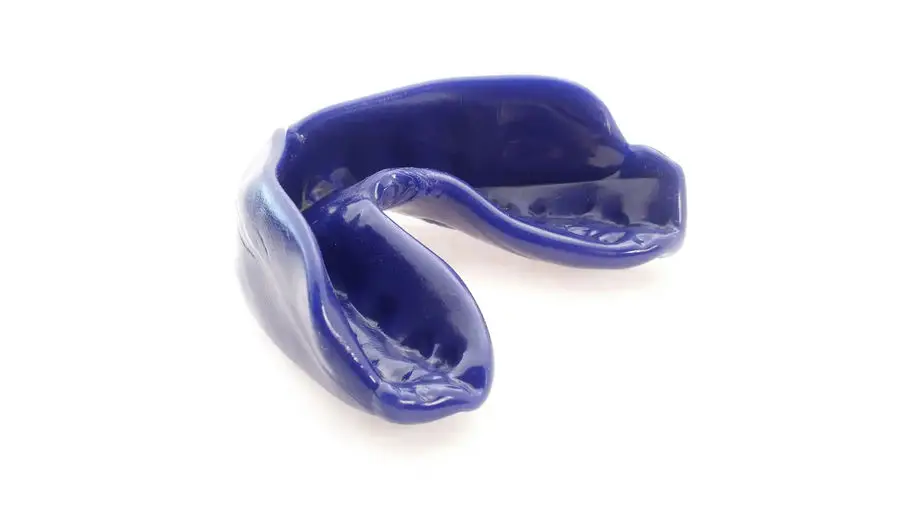
Custom-fitted guards made from impressions of your teeth: sports mouthguards protect against impact, while night guards protect against grinding (bruxism) during sleep.
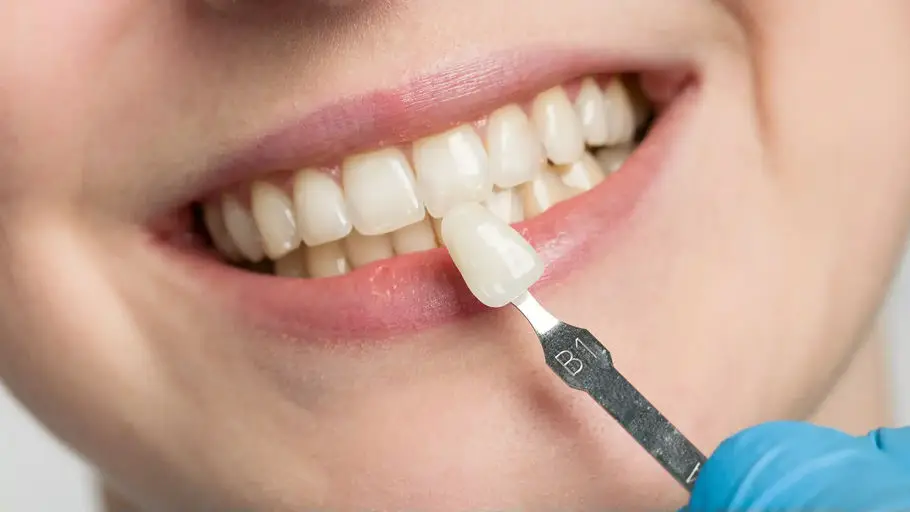
Thin porcelain or composite shells bonded to the front surface of teeth to change their shape and colour, commonly used for chips, gaps and discolouration.
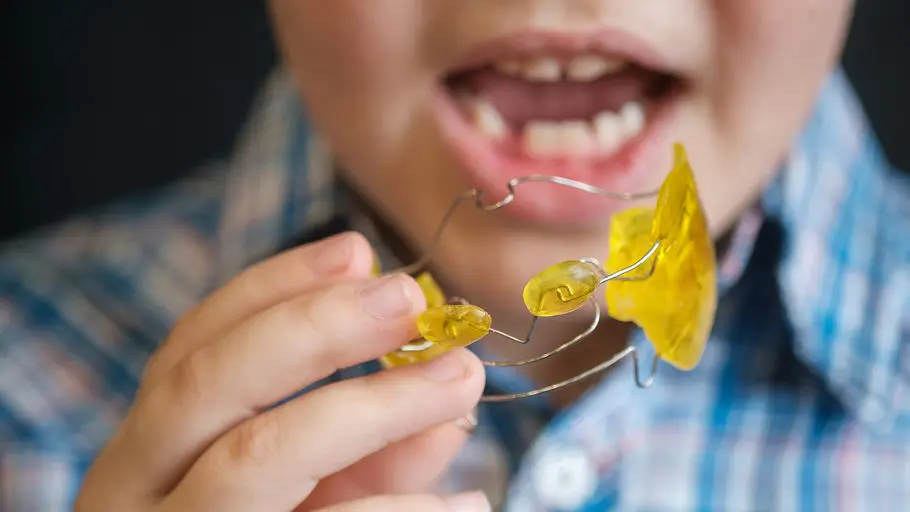
Appliances that guide tooth position and jaw growth — expanders, functional appliances, space maintainers and habit-breaking devices — often used in children before or alongside braces.
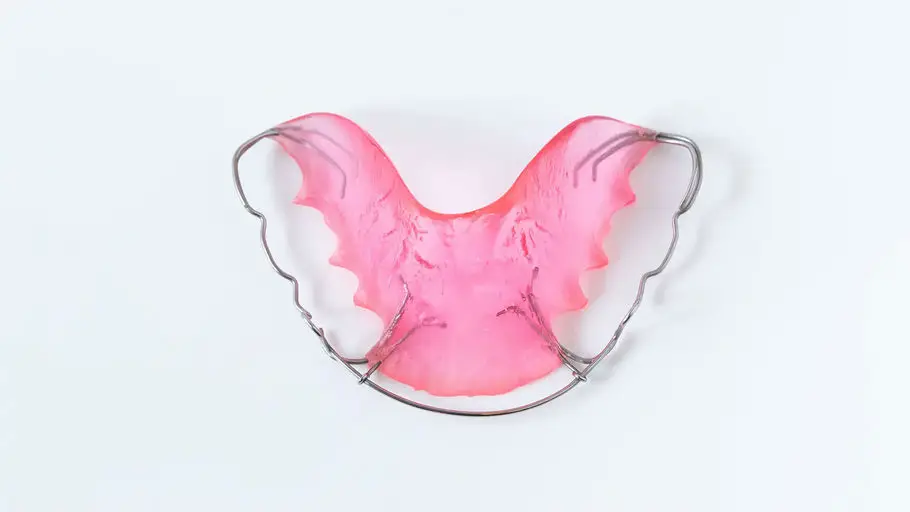
Custom appliances worn after braces or aligner treatment to hold teeth in their corrected positions — removable clear or Hawley retainers, or a fixed wire behind the teeth.
How clear aligners and fixed braces compare on the cases they treat, visibility and cost
Managing soreness, eating and cleaning in the early weeks with braces
How metal and ceramic brackets compare on appearance, durability and cost
Why teeth drift back after braces, and how long a retainer needs to be worn