
Wisdom Teeth: When to Remove Them

Medically reviewed by Dr Matthew Sng , Clinical Director
Last reviewed
When removal is clinically necessary, and when a wisdom tooth can be left alone
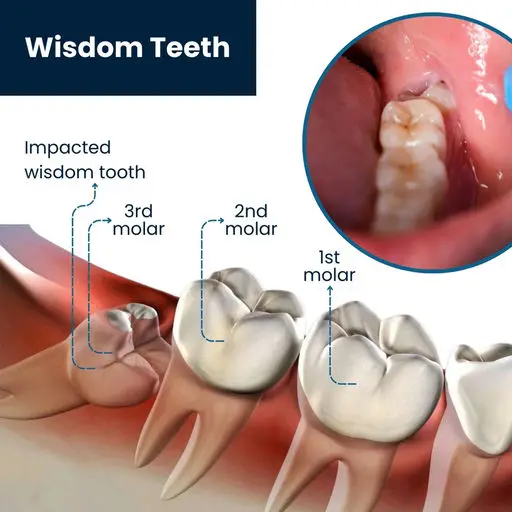
Not every wisdom tooth needs to come out. If a wisdom tooth grows in straight and you can clean it, it can usually stay — removal is considered when it's impacted or causing problems. Here's how to tell, and what surgery involves.
When wisdom teeth can stay
Wisdom teeth (third molars) usually appear in the late teens or twenties. If they erupt in the right position and you can keep them clean, there's often no need to remove them.
When removal is considered
Often the jaw doesn't have enough room, and the tooth gets stuck under the gum or against the next tooth — an impacted wisdom tooth. Common problems include:
- Hidden decay: food traps at the back of the mouth are hard to clean, and decay can spread to the second molar.
- Gum infections: the flap of gum over a partly erupted tooth traps bacteria, causing swelling and pain.
- Damage to neighbours: a sideways tooth can push against and damage the roots of the second molar.
- Cysts: a fluid-filled sac can form around a trapped tooth and, left unchecked, affect the jawbone and nearby nerves.
Planning and comfort
For most cases, standard 2D imaging (OPG) is enough to assess the tooth. For deeply impacted teeth, 3D imaging (CBCT) gives a detailed map of the nerves, sinuses, and root position for safer planning. The scan is painless and takes under a minute.
On the day, the area is numbed with local anaesthesia. You may feel some pressure but shouldn't feel sharp pain, and many patients find removal easier than expected.
Sedation options
If you feel anxious, several options can help you relax:
- Nitrous oxide (laughing gas) — breathed through a nasal hood; keeps you awake but calm.
- Oral sedation — a prescription sedative taken before your appointment.
- IV sedation — a relaxed "twilight" state, given by a trained anaesthetist.
- General anaesthesia — for complex cases or severe anxiety, you sleep through the procedure in a day-surgery theatre.
A consultation is needed before any sedation plan so we can review your health and choose the right option for you.
MediSave
For Singaporeans and PRs, impacted wisdom tooth surgery is MediSave-claimable:
- Use your own MediSave to offset the surgical cost and reduce the cash you pay upfront.
- If you don't have enough, an approved family member's account — such as a parent or spouse — may be used.
- We handle the paperwork and submit the claim at the clinic.
If your wisdom teeth are trapping food or causing discomfort, it's safer not to wait for a flare-up. Book a wisdom tooth consultation, and see our guides to caring for wisdom teeth and recovering after oral surgery.