Missing an Upper Back Tooth? Understanding Sinus Lift Surgery for Dental Implants

Medically reviewed by Dr Matthew Sng , Clinical Director
Last reviewed
Why the upper back jaw often lacks the bone height an implant needs, and how a sinus lift addresses it
A sinus lift (also called sinus augmentation) adds bone beneath the sinus in your upper back jaw so there is enough height to anchor a dental implant securely. It is a routine, established procedure in oral and maxillofacial surgery.
Why it's sometimes needed
Just above your upper back teeth are the maxillary sinuses — air-filled spaces sitting above the "ceiling" of your upper jawbone. When you lose an upper back tooth, two things happen over time:
- Bone shrinkage (resorption): without a tooth root to stimulate it, the jawbone in that area gradually thins.
- Sinus expansion: as the bone thins, the air-filled sinus drops and expands into the empty space.
The result can be too little bone height to safely place an implant. Placing one anyway could let it extend into the sinus cavity — so a sinus lift restores the foundation first.
What the procedure involves
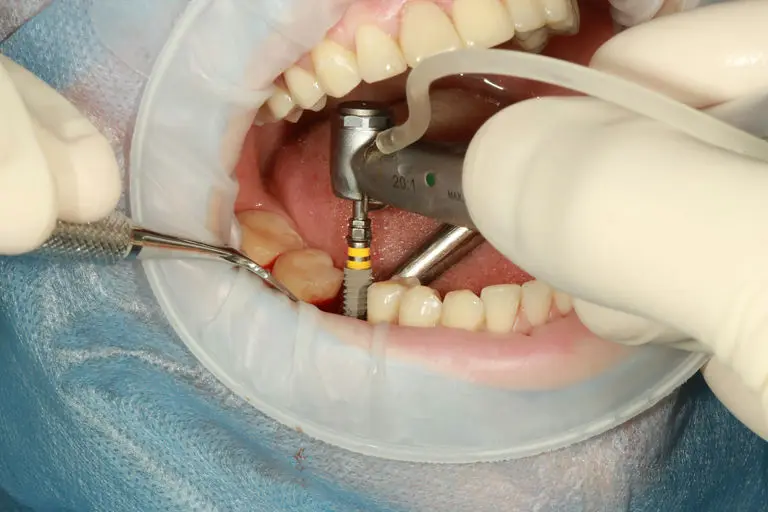
A sinus lift gently raises the sinus membrane and places bone grafting material beneath it, rebuilding the height needed for a stable implant. A surgeon generally uses one of two approaches:
- Crestal approach (for minor lifts): done vertically through the same small opening created for the implant. The sinus floor is raised a few millimetres and the graft placed — often during the same appointment as implant placement.
- Open (lateral window) approach (for larger lifts): a small access window is made on the side of the upper jaw, the membrane is lifted, and the graft is placed. The implant may go in at the same visit if there is enough bone to anchor it, or a few months later once the new bone has solidified.
Safety and planning
Because the sinus is a delicate structure, we plan carefully before surgery. We use 3D imaging (CBCT) to map the exact dimensions of your jawbone and the position of the sinus floor, then choose the approach that carries the least risk for your anatomy.
The procedure is usually done under local anaesthesia. For patients who feel anxious, sedation options range from nitrous oxide to IV sedation administered by a trained anaesthetist.
Recovery
Recovery is generally manageable, and your main job is to protect the graft while it heals:
- The first few days: stick to a soft diet and follow the pain-management plan from your surgeon for any mild, expected swelling.
- The "no-pressure" rule: avoid anything that raises pressure in your nasal passages and could shift the graft — no forceful nose-blowing, no air travel for a few weeks, and if you need to sneeze, do it with your mouth open.
MediSave
For Singaporeans and PRs, MediSave may help offset the cost of sinus lift and bone grafting performed as part of implant surgery. We'll advise you on what applies at your consultation.
A sinus lift adds a little time, but it gives a dental implant a solid foundation that can last for years. Book a consultation and we'll check whether you need one and explain every step before we begin.