Implant vs Bridge vs Denture: How to Replace a Missing Tooth

Medically reviewed by Dr Matthew Sng , Clinical Director
Last reviewed
How the three ways to replace a missing tooth compare on longevity, bone and cost
Three options can replace a missing tooth — a dental implant, a bridge, or a denture. The right choice depends on how many teeth are missing, the health of your bone and gums, your budget, and whether you prefer something fixed or removable.
At a glance
| Dental implant | Bridge | Denture | |
|---|---|---|---|
| How it works | Titanium post in the jaw, topped with a crown | False tooth held by crowns on the two neighbouring teeth | Removable appliance resting on the gums |
| Surgery | Yes | No | No |
| Affects nearby teeth | No | Yes — they're trimmed for crowns | No |
| Stability | Fixed, feels like a natural tooth | Fixed | Removable; can feel less stable |
| Upfront cost | Higher | Moderate | Lowest |
| Typical timeline | A few months, including healing | Two to three weeks | A few weeks |
How each one works
Dental implant — a titanium post placed in the jawbone, topped with a crown. It replaces a single tooth without affecting the neighbours and helps preserve the jawbone. It needs enough healthy bone and a healing period of a few months. See dental implants.
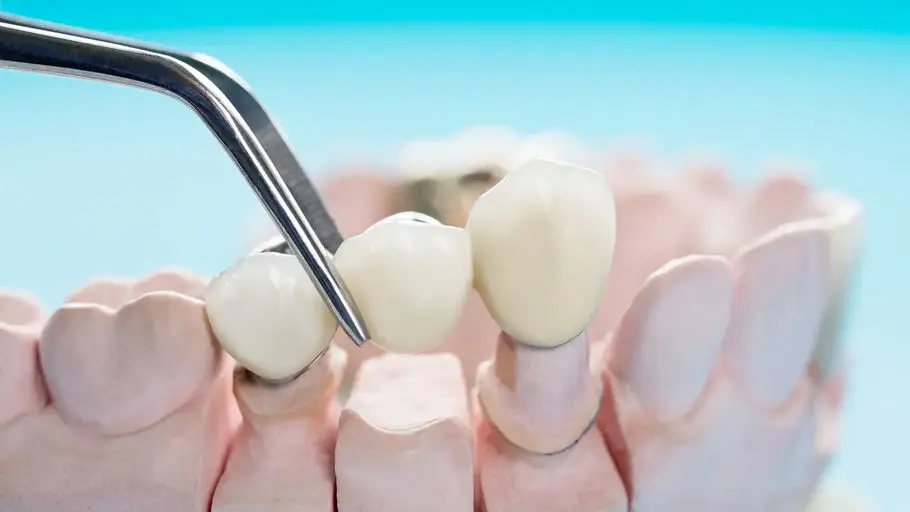
Bridge — a false tooth held in place by crowns on the two adjacent teeth. It is fixed and quicker than an implant, with no surgery. The trade-off is that the neighbouring teeth are trimmed to hold the crowns. See crowns and bridges.
Denture — a removable appliance that replaces one, several, or a full arch of teeth. It has the lowest upfront cost and needs no surgery. It is removed for cleaning and may need adjusting over time. See dentures.
How to choose
A consultation and an X-ray help match the option to your situation — the number of missing teeth, the health of your bone and gums, your budget, and whether you want something fixed or removable.
MediSave may apply to surgical implant placement and certain oral surgery, and CHAS subsidies may apply for eligible cardholders. Book a consultation and we'll talk through the trade-offs for your case.