Missing an Upper Back Tooth? Understanding Sinus Lift Surgery for Dental Implants

Learn how sinus lift surgery safely creates bone support for secure, long-lasting dental implants in the upper back jaw.
If you are considering a dental implant to replace a missing upper back tooth, your dentist or oral surgeon might have mentioned the term "sinus lift." For many patients, hearing that they need surgery involving their sinuses can sound intimidating.
However, a sinus lift- also known in the medical field as sinus augmentation - is a standard and highly established procedure in oral and maxillofacial surgery.
To understand why it is often necessary for dental implants, it helps to visualize the anatomy of your upper jaw. Just above your upper back teeth are your maxillary sinuses. You can think of them as empty, air-filled spaces sitting right above the "ceiling" of your upper jawbone.
When you lose an upper back tooth, two things happen over time:
Bone Shrinkage (Resorption): Without a tooth root to stimulate it, the jawbone in that area naturally begins to thin out and melt away.
Sinus Expansion: As the bone thins, the air-filled sinus cavity gradually drops and expands downwards into the empty space.
If you decide to get a dental implant later, there simply might not be enough bone height left to safely anchor the titanium root. If we were to place an implant without sufficient bone, it could extend into the delicate sinus cavity.
What Exactly is a Sinus Lift?
A sinus lift is a precise surgical procedure designed to gently raise the sinus membrane and add bone grafting material beneath it. This restores the required bone height, creating a stable, secure foundation for your future dental implant.
Depending on your specific facial anatomy and how much bone is required, an oral surgeon generally uses one of two careful approaches:
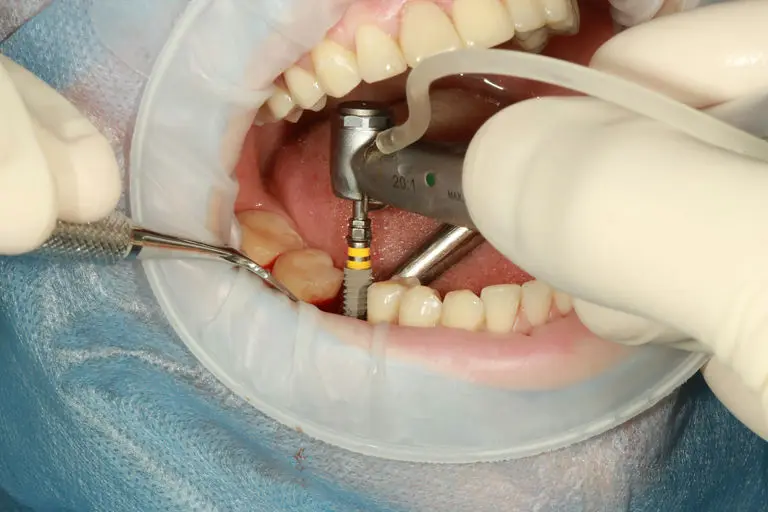
The Crestal Approach (For minor lifts): If you only need a small amount of additional bone height, we can often perform a crestal sinus lift. This is done vertically through the exact same small opening created for the implant. We gently push the sinus floor up by a few millimeters and carefully place the bone graft. This approach is highly efficient and is done during the same appointment as your dental implant placement.
The Open Approach (For significant lifts): Also known as a lateral window approach, this method is utilized when a larger volume of bone is needed. We create a small, temporary access window on the side of your upper jawbone. We carefully lift the sinus membrane, place the bone grafting material into the space, and close the gum tissue. The dental implant may be placed at the same visit if there is some bone to anchor the implant initially, or a few months later - giving the new bone ample time to solidify.
Safety and Detailed Planning
Because the maxillary sinus is a delicate structure, we rely on detailed planning before any surgical procedure begins. We utilize advanced 3D imaging (CBCT) to carefully map out the exact dimensions of your jawbone and the precise location of your sinus floor.
This digital roadmap is a vital part of our preparation. It removes the guesswork and allows us to determine exactly which surgical approach is the safest and most reliable for your unique anatomy.
Comfort and Patient Care
When you visit the Oral and Maxillofacial Surgeon for a sinus lift, you will find our surgical team focused and ready. We are dedicated to providing meticulous patient care to ensure your surgical experience is as smooth and comfortable as possible.
The procedure is typically performed under local anaesthesia, ensuring you are adequately numbed throughout. For patients who feel anxious, we also offer several sedation options, ranging from gentle nitrous oxide to IV sedation administered by a trained anaesthesiologist, to help you go through the surgery easily.
What to Expect During Recovery
Recovery is generally very manageable, but you have one critical job: protect the graft while it heals.
The first few days: Stick to a soft diet and use the tailored pain management plan provided by your surgeon to handle any mild, expected swelling.
The "No-Pressure" Rule: You must avoid creating any pressure in your nasal passages that could shift the bone graft or pop the healing sinus membrane. This means no forceful nose blowing, no flying in airplanes for a few weeks, and if you feel a sneeze coming on, you must sneeze with your mouth open.
While the word "surgery" is never fun, a sinus lift is a tried-and-true stepping stone. It takes a little extra time and patience, but it ensures your new dental implant has a rock-solid foundation that can last a long time.
Our focus is always on patient-centered care. We will take the time to thoroughly explain the procedure, answer all your questions, and guide you through the recovery process safely.